
Mental health EMR systems are transforming how therapists, psychiatrists, and behavioral health clinics manage patient information across Tier One markets like the US, UK, Canada, and Australia. For decades, paper charts made it difficult to coordinate care, track patient progress, or maintain compliance with strict data privacy laws such as HIPAA in the US and GDPR in the UK. In today’s fast-paced healthcare environment, mental health providers need solutions that are efficient, secure, and specifically tailored to behavioral health practices.
A robust mental health EMR (Electronic Medical Record) system centralizes patient data, reduces administrative overhead, and improves the quality of patient care by giving providers instant access to treatment history, therapy notes, and medication management tools. Unlike general medical EMRs, these systems are designed with psychiatry and therapy workflows in mind—integrating features like progress tracking, outcome measurement tools, telehealth support, and appointment reminders.
The promise is simple: less paperwork, more time with patients, and a smoother path to financial sustainability for practices. With rising mental health demands in Tier One countries—where millions are seeking therapy, counseling, and psychiatric treatment—investing in the right EMR is no longer optional; it’s a competitive necessity. Practices that adopt advanced EMR software not only enhance patient experiences but also boost profitability, improve compliance, and scale faster.
Move Away from Paper Charts: Simplify Mental Health Records with Modern EMR Systems for Tier One Practices
Paper-based record-keeping still exists in many smaller clinics, but it comes with risks: lost files, human error, and slow data retrieval. In Tier One markets where patient expectations and compliance standards are higher, sticking with paper charts can hurt both efficiency and trust. ModernMental Health EMR Systems eliminate these risks by digitizing and centralizing patient information.
For instance, a mid-sized clinic in Toronto transitioned from paper charts to a behavioral health EMR. The result? A 45% reduction in administrative errors and a 30% increase in daily patient capacity. The staff could now pull up records instantly, and therapists spent less time charting and more time engaging with patients.
| Paper Chart Limitation | Modern EMR Advantage |
| Easily misplaced | Secure cloud storage |
| Handwritten errors | Structured digital forms |
| Time-consuming retrieval | Instant search & access |
| Limited sharing | Secure provider collaboration |
Key Takeaway: Clinics in the US, UK, Canada, and Australia that replace paper workflows with EMRs gain measurable improvements in compliance, speed, and profitability. Explore more details here →
Why is Mental Health EMR Important for Clinics in the US, UK, Canada & Australia
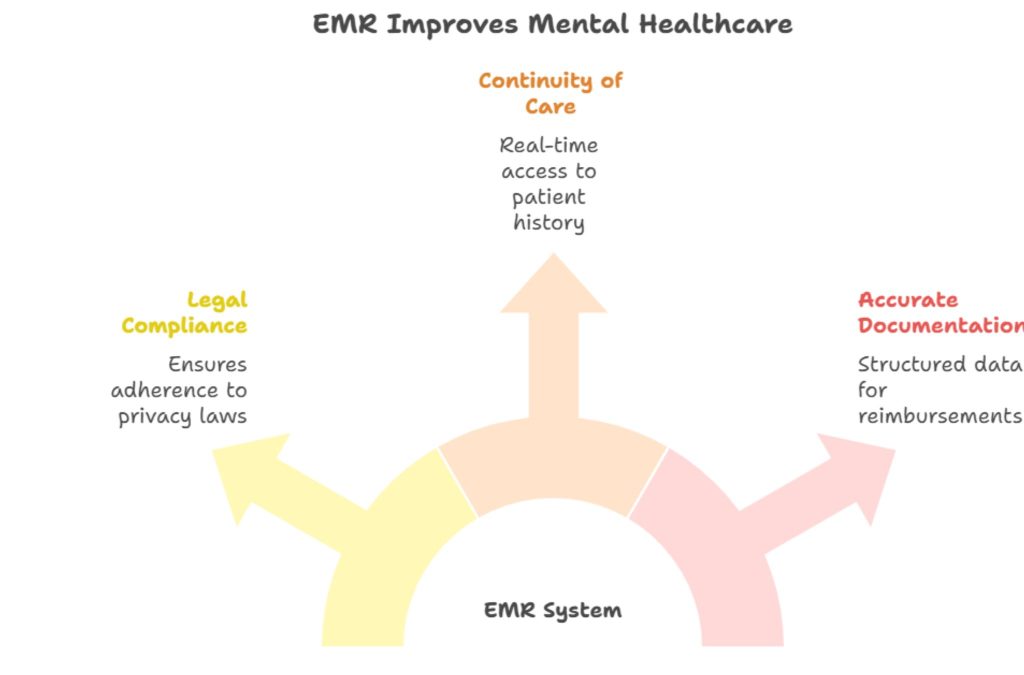
In Tier One countries, healthcare systems are highly regulated, and mental health practices face unique challenges. Clinics must handle sensitive information while complying with privacy regulations like HIPAA (US), GDPR (UK/EU), and PHIPA (Canada). A tailored mental health EMR ensures legal compliance while streamlining workflows.
Consider a behavioral health center in Sydney: before implementing EMR, therapists struggled with fragmented records. After migrating, providers accessed patient histories in real time, improving continuity of care for complex cases such as PTSD and bipolar disorder.
Additionally, insurers in the US and UK increasingly demand accurate, structured clinical documentation for reimbursements. Without a reliable EMR, clinics risk delayed payments or denied claims.
| Country | Primary Compliance Law | EMR Benefit |
| US | HIPAA | Protects sensitive patient data |
| UK | GDPR | Ensures lawful data processing |
| Canada | PHIPA | Maintains privacy with secure exchange |
| Australia | Privacy Act | Enhances patient trust & compliance |
Result: Adopting EMRs is not just about efficiency—it’s about staying legally compliant, financially secure, and patient-focused.
Comprehensive Mental Health EMR: Personalized Software Solutions for Your Practice
Every practice has unique needs. A psychiatrist treating medication-resistant depression in New York requires different tools than a family therapist in London. Comprehensive EMR solutions offer personalized modules that adapt to various workflows.
For example, a Canadian group practice configured its EMR to include custom therapy note templates, automated patient reminders, and medication management dashboards. This not only reduced no-show rates by 25% but also streamlined clinical documentation.
Personalized EMRs also integrate billing, scheduling, and telehealth under one platform. For practices juggling multiple clinicians, such systems ensure consistency and reduce costly errors.
Table: Customizable Features in Mental Health EMRs
| Feature | Impact |
| Custom therapy note templates | Saves time & increases accuracy |
| Medication management | Enhances patient safety |
| Automated reminders | Reduces no-shows & boosts revenue |
| Integrated billing | Faster reimbursement cycles |
Key Tip: When selecting a mental health EMR, prioritize systems that allow flexible customization—this ensures long-term scalability.
Built for Today’s Mental Health Practices: Efficient, Secure, and Patient-Centric EMR Systems
Today’s patients demand digital-first experiences—easy online scheduling, telehealth sessions, and quick access to their health data. Modern EMR systems meet these demands while maintaining top-tier security.
A private practice in Chicago, for instance, implemented an EMR with integrated telepsychiatry tools. Within six months, they increased patient reach by 38% and attracted clients from rural areas who previously lacked access to specialists.
| Patient Expectation | EMR Solution |
| Virtual sessions | Integrated telehealth |
| Quick results | Real-time data access |
| Secure info handling | End-to-end encryption |
Explore More Details Here → Practices that prioritize patient-centric EMR solutions see higher satisfaction scores, stronger client retention, and improved ROI.
Top EMR Solutions for Behavioral Health Clinics Targeting Tier One Market Efficiency
The global EMR market is crowded, but a few solutions stand out in Tier One countries. Leading platforms like AdvancedMD, TheraNest, TherapyNotes, and SimplePractice are specifically designed for mental health professionals.
Comparison of Leading EMRs for Behavioral Health
| EMR Platform | Best For | Key Features |
| AdvancedMD | Large clinics & hospitals | Billing automation, telehealth, analytics |
| TheraNest | Small to mid-sized practices | Affordable, user-friendly, therapy notes |
| TherapyNotes | Private practices | Specialty templates, insurance claims |
| SimplePractice | Multi-provider clinics | Scheduling, telehealth, client portal |
Business Outcome: By aligning the right EMR to clinic size and services, practices in the US, UK, Canada, and Australia can maximize efficiency while ensuring compliance.
Improved Communication Between Providers: Enhance Collaboration & Patient Outcomes in Tier One Clinics
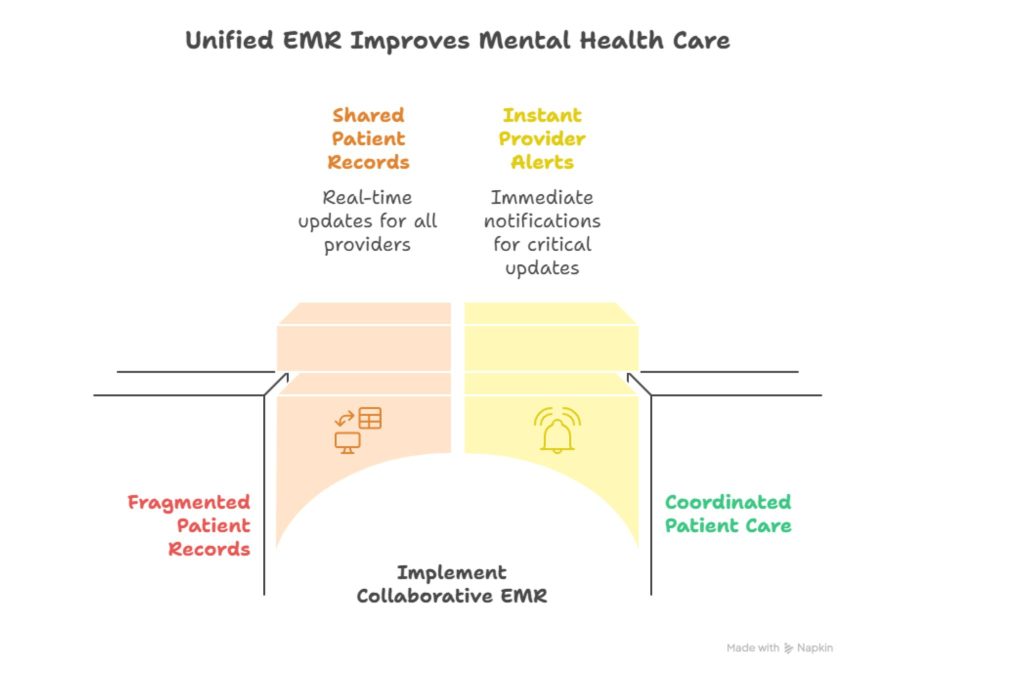
Mental health care often involves multiple providers: psychiatrists, psychologists, therapists, and general physicians. Without a unified EMR, communication gaps can harm outcomes.
Take the case of a multi-disciplinary UK clinic: after adopting a collaborative EMR, they reduced duplicated assessments by 60% and improved treatment alignment across departments.
| Challenge | Solution with EMR |
| Repeated assessments | Shared patient records |
| Miscommunication | Real-time updates |
| Treatment delays | Instant provider alerts |
Expert Insight: Coordinated care increases recovery rates and strengthens patient trust.
Tailored Mental Health EHR Features: Reduce Admin Burden and Boost Revenue
Administrative tasks often drain clinical staff time. Tailored EMRs automate repetitive work, freeing providers to focus on care.
Example: A Canadian therapist using TheraNest cut documentation time by 40% with pre-built templates. The clinic also saw a 20% revenue boost from faster billing.
| Feature | Benefit |
| Pre-built templates | Saves charting time |
| Automated billing | Faster reimbursements |
| Task reminders | Reduces missed follow-ups |
Takeaway: Tailored EMRs equal less admin work and higher profitability.
Quick Implementation & Seamless Integration: Get Your EMR Running Fast for US, UK, Canada, Australia Practices
Switching to EMRs can feel overwhelming. However, modern platforms offer smooth migration tools, training support, and integrations with existing systems.
In a Canadian case study, a mid-size clinic went live in under three weeks using a cloud-based EMR with data import features. Staff adoption was 95% within two months.
Result: Seamless implementation reduces downtime and accelerates ROI.
Advanced Reporting & Analytics: Make Data-Driven Decisions for Behavioral Health Success
Analytics help clinics spot trends, predict demand, and optimize care. For example, a US practice used reporting dashboards to identify rising anxiety cases among teens, leading to tailored group therapy programs.
| Metric | Business Value |
| No-show rate | Improves scheduling |
| Patient outcomes | Supports evidence-based care |
| Billing cycles | Enhances financial planning |
Key Tip: Choose EMRs with strong analytics modules to turn data into actionable insights.
Telehealth & Remote Patient Management: Expand Services While Maximizing ROI
Telehealth isn’t just a pandemic solution—it’s the future. In Australia, clinics offering telepsychiatry via EMRs increased revenue streams by reaching patients in remote regions.
| Telehealth Benefit | Outcome |
| Rural access | Wider patient reach |
| Lower cancellations | More consistent care |
| Convenience | Higher patient satisfaction |
Result: Remote patient management boosts ROI while expanding access.
How to Choose the Best Mental Health EMR System for Your Clinic in Tier One Countries
- Identify clinic size and needs
- Ensure compliance with local regulations
- Look for customization options
- Check integration with billing & scheduling
- Prioritize training & support
Micro-CTA: Explore trial versions before committing—test workflows to ensure staff adoption.
Why EMR Software Improves Patient Care and Staff Efficiency in US, UK, Canada & Australia
EMRs reduce documentation errors, support faster decision-making, and streamline communication. Staff efficiency rises, and patients receive more coordinated care.
Result: Clinics adopting EMRs report 20–40% efficiency gains within the first year.
What Features Should You Expect from a Modern Behavioral Health EMR System
- Specialty note templates
- Integrated telehealth
- Advanced reporting
- E-prescriptions
- Patient engagement tools
Tip: Ensure your EMR supports mobile access for flexibility.
Step-by-Step Guide: Migrating Patient Data to a New Mental Health EMR System
- Audit current records
- Choose migration method (manual vs. automated)
- Train staff
- Test in pilot mode
- Go live & monitor
Takeaway: Careful planning ensures minimal disruption during migration.
Hospitals & Large Practices: Leveraging Enterprise-Grade Mental Health EMR for Optimal Care
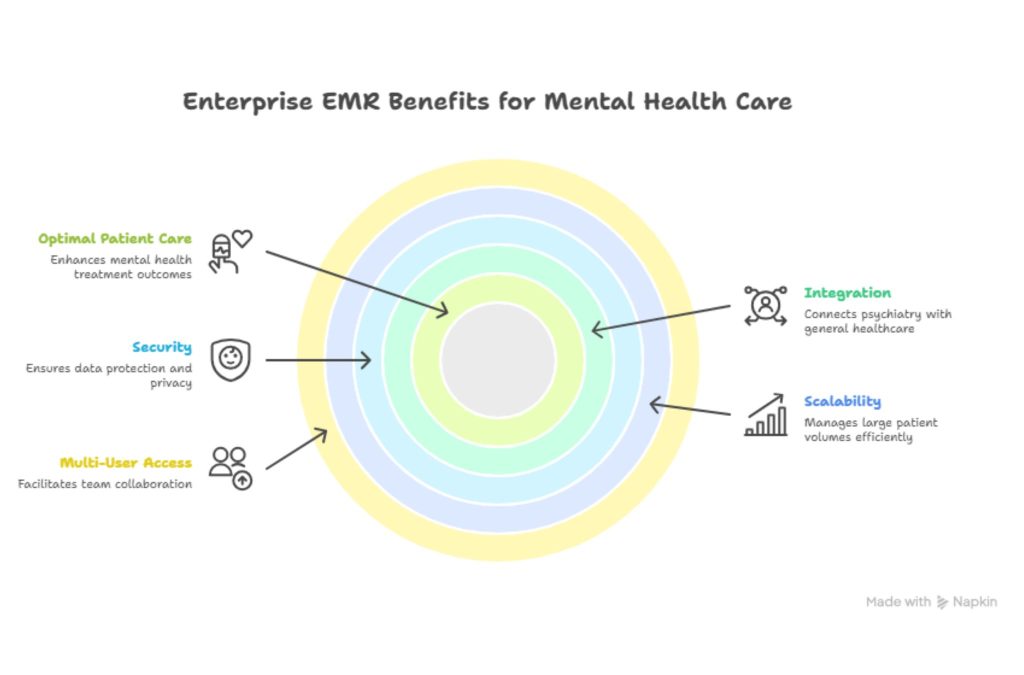
Large practices require scalability, multi-user access, and enterprise-level security. Enterprise EMRs like AdvancedMD and Epic provide these, supporting thousands of patient records securely.
Key Insight: Enterprise-grade EMRs enable large hospitals to integrate psychiatry within broader healthcare workflows.
Case Study: How Top US Clinics Streamlined Workflows with Mental Health EMR
A Chicago clinic reduced patient wait times by 35% after switching to EMR. Staff noted smoother workflows, fewer errors, and better compliance.
FAQ: What Challenges Do Electronic Medical Records Address in Tier One Practices
EMRs solve data fragmentation, billing inefficiencies, compliance risks, and poor communication. They streamline documentation and boost financial outcomes.
Insights: Innovative Features Driving Behavioral Health EMR Adoption Globally
Emerging features include AI-driven predictive analytics, mood-tracking apps, and voice-to-text charting. These innovations improve both efficiency and outcomes.
Case Study: ROI of Implementing a Modern Mental Health EMR in Canadian Clinics
One Toronto-based clinic reported a 30% revenue increase and 50% admin time savings within six months of implementation.
FAQ: Best EHR Solutions for Private Practice Therapists in the US & UK
TherapyNotes and TheraNest are top choices—affordable, user-friendly, and tailored to small practices.
Expert Opinion: Dr. Jane Smith, Psychiatrist, US – “EMR Systems Transform Care Coordination”
“Electronic Medical Records allow psychiatrists and therapists to work together more effectively, reducing errors and enhancing patient outcomes.”
Statistic Highlight: 85% of Tier One Clinics Report Reduced Admin Time with Mental Health EMRs
Recent surveys confirm EMRs free up valuable clinical hours—giving providers more time for direct patient care.
Client Testimonial: UK Clinic Achieves 40% Faster Patient Charting with Our EMR
“Before EMR adoption, charting consumed our evenings. Now, documentation is 40% faster, giving us work-life balance and better patient interactions.”
Industry Insight: Behavioral Health EMR Market Growth in Australia & Canada
The behavioral health EMR market is projected to grow 12% annually, driven by rising demand for digital mental health solutions.
Professional Quote: “Secure, Scalable EMR Software is the Future of Mental Health Practice Management”
Industry leaders emphasize that the next decade will be defined by scalable EMR adoption across mental health sectors.
Optimized FAQ Section for SEO & AdSense
What is the best EHR for mental health?
The best EHR for mental health depends on clinic size and needs. For small practices, TheraNest and TherapyNotes offer affordable, easy-to-use platforms. Larger clinics and hospitals in the US, UK, Canada, and Australia often prefer AdvancedMD or Epic for their scalability and robust analytics. Key features to look for include specialty note templates, telehealth integration, billing support, and compliance with HIPAA or GDPR. Practices that select a tailored solution typically see faster reimbursements, improved efficiency, and higher patient satisfaction. Explore trial versions before committing to ensure workflows match your staff’s needs.
What is EMR in mental health?
In mental health, an EMR (Electronic Medical Record) is a digital system that stores and manages patient information such as therapy notes, medication history, treatment plans, and progress reports. Unlike generic EMRs, mental health-specific systems are designed for behavioral health workflows, ensuring secure, structured data management. They improve communication between providers, streamline documentation, and enhance patient safety. In Tier One markets, EMRs also support compliance with HIPAA, GDPR, and other privacy laws. Ultimately, a mental health EMR allows clinics to deliver more personalized care while reducing administrative burdens.
What are the four types of mental health services?
The four main types of mental health services include: (1) Outpatient services such as therapy, counseling, and psychiatric consultations, (2) Inpatient services for acute mental health crises requiring hospitalization, (3) Community-based services such as crisis hotlines and outreach programs, and (4) Telehealth or digital services that connect patients with providers remotely. Each plays a critical role in Tier One countries, where demand for accessible mental health care is growing. EMRs support all four types by ensuring accurate records, facilitating collaboration, and enabling continuity of care across settings.
What EMR program is most commonly used?
The most commonly used EMR programs in mental health vary by country. In the US, TherapyNotes, TheraNest, and AdvancedMD are widely adopted by private practices and larger clinics. In the UK, systems like CareNotes are popular, while Canadian practices often choose Telus Health EMR or cloud-based platforms. Australian clinics increasingly adopt global solutions like SimplePractice. The common factor across Tier One markets is the need for compliance, customization, and integrated telehealth. Clinics should choose a program that matches their size, specialty, and growth goals.
Best EHR for mental health private practice
For private practices, affordability, usability, and therapy-specific features are top priorities. TherapyNotes is highly regarded in the US for its specialty templates and billing tools. TheraNest is popular in both the US and UK for its affordability and intuitive design. SimplePractice appeals to multi-provider private practices in Australia and Canada thanks to its scheduling and telehealth features. The right choice depends on practice size, budget, and patient needs. Most platforms offer free trials, making it easier for therapists to test before purchasing.
Mental health software for clinics in US, UK, Canada, Australia
Clinics in Tier One countries require software that meets strict compliance standards and adapts to local workflows. US clinics often choose AdvancedMD or TherapyNotes for HIPAA compliance and strong billing features. UK practices prefer GDPR-compliant platforms like CareNotes, while Canadian clinics lean toward Telus Health EMR. In Australia, SimplePractice is growing in popularity for its patient portal and telehealth support. Regardless of geography, the best mental health software combines ease of use, customization, and robust security to support sustainable growth.
AdvancedMD mental health features & ROI
AdvancedMD is built for medium to large practices needing advanced functionality. Its mental health features include customizable therapy templates, integrated telepsychiatry, and automated billing. Clinics report significant ROI through faster claims processing, reduced administrative errors, and enhanced patient engagement. For example, a US behavioral health group using AdvancedMD increased reimbursement rates by 25% within the first year. Practices in the UK, Canada, and Australia can also benefit from its analytics dashboards, which provide insights for smarter decision-making.
AMD mental health solutions for therapists
AMD’s solutions are tailored for therapists needing flexibility. The platform allows customizable therapy notes, client scheduling, e-prescriptions, and secure patient portals. Therapists benefit from reduced paperwork and more time with patients. In the US, HIPAA-compliant telehealth features are particularly valuable, while in Canada and Australia, the system helps ensure continuity of care across different providers. ROI is achieved through improved efficiency, higher patient retention, and fewer administrative bottlenecks. For solo or small practices, AMD provides a balance between affordability and advanced features.
Therapy notes EMR software comparison
TherapyNotes, TheraNest, and SimplePractice are the leading options for therapists. TherapyNotes is strong in billing and insurance claim processing, while TheraNest is more budget-friendly with customizable templates. SimplePractice excels in telehealth and client portals. For Tier One countries, compliance is a key factor—HIPAA in the US, GDPR in the UK, PHIPA in Canada, and Privacy Act compliance in Australia. Clinics should compare pricing, features, and support options carefully before committing.
TheraNest mental health EMR review
TheraNest is one of the most popular mental health EMRs for small to mid-sized practices. It offers intuitive therapy note templates, group scheduling, telehealth support, and affordable pricing. Therapists report saving hours weekly on documentation and seeing improved patient engagement through automated reminders. In the US and UK, TheraNest is particularly valued for its insurance billing tools, while Canadian and Australian practices appreciate its scalability and secure cloud hosting. Overall, TheraNest balances affordability, usability, and compliance, making it a top choice for growing practices.